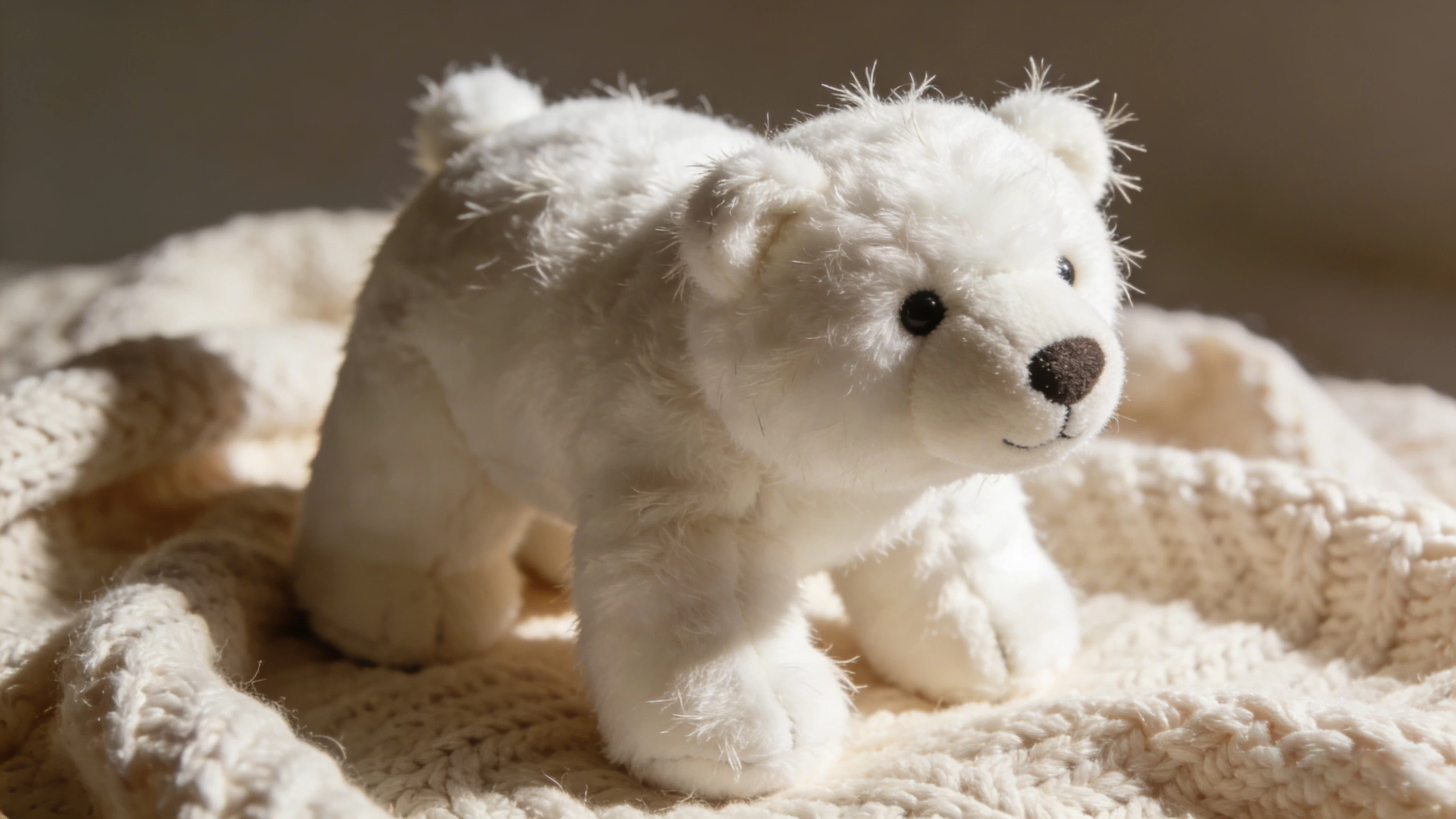
Fabric is the single most noticeable thing about a plush toy. Before a child sees the shape or the face, they feel the surface — and the surface is what customers judge in a product photo as much as in the hand. For brands sourcing custom plush toys, fabric selection is therefore both a design decision and a cost decision.
This guide covers the fabrics most commonly used in professional plush toy production, what each one is good for, and how to choose between them.
The Two Technical Measures That Matter
Before comparing specific fabrics, it helps to understand two terms that appear on every plush toy specification sheet:
- Pile height — the length of the fibres standing up from the fabric backing. Short pile (2–5 mm) looks clean and detailed; long pile (10–25 mm) looks fluffy and luxurious.
- Weight (GSM) — grams per square metre. Heavier fabric feels denser and more premium, resists abrasion better, and also costs more. Most plush toys use fabric between 250 and 450 GSM.
The Main Plush Fabrics at a Glance
| Fabric | Pile | Feel | Best for |
|---|---|---|---|
| Crystal super soft (PV fleece) | Long, silky | Ultra smooth, reflective sheen | Premium teddy bears, gift items |
| Short pile plush (velboa) | 2–4 mm | Dense, even, velvety | Detailed characters, printing, fine shapes |
| Rabbit fur / faux fur | 10–20 mm | Fluffy, directional, natural | Realistic animals, pets, luxury lines |
| Cotton / canvas | Flat | Matte, structured, breathable | Baby-safe toys, minimalist brands |
| Flannel / brushed cotton | Flat, brushed | Soft, warm, slightly fuzzy | Baby blankets, comfort toys |
| Jersey knit | Flat, stretchy | Stretchy, casual | Character dolls, clothing on toys |
| Minky / dotted plush | 2–3 mm, embossed | Cuddle-soft with raised dots | Baby comfort items, premium soft lines |
Crystal Super Soft: The Premium Standard
Crystal super soft (also called crystal velvet or PV fleece) is the fabric most associated with high-end plush. Its long, fine fibres catch the light, producing the characteristic glossy sheen that reads as "luxury" in product photography.
Use it when: the toy is a gift item, a premium licensed character, or the centrepiece of a product line.
Watch out for: the long pile can soften the definition of small facial features, and it shows handling marks more readily than short pile.
Short Pile Plush (Velboa): The Workhorse
Short pile plush is the most widely used fabric in the industry, and for good reason. Because the fibres are short and dense, the fabric holds sharp detail — which makes it ideal for printed patterns, embroidered features, coloured panels and accurate character proportions.
Use it when: you need accurate shapes, printed detail, or a wide colour palette at a reasonable cost.
Watch out for: it feels less "fluffy" than long pile, so it suits character toys better than generic teddy bears.
Rabbit Fur and Faux Fur
These fabrics have a longer, directional pile that mimics animal fur. Because the fibres lie in one direction, they create natural shading and movement, which makes them the fabric of choice for realistic animals.
Use it when: the design is a realistic animal, a pet product, or a toy where texture is the main selling point.
Watch out for: longer pile sheds more during cutting and sewing, so production waste and finishing time are higher — and so is the price.
Cotton, Flannel and Knit Fabrics
Flat woven and knit fabrics serve a different purpose: they signal simplicity, natural materials and baby-friendliness. They are also easier to print on and can be combined with plush panels for a modern, minimal look.
Use it when: the market is organic, eco-conscious or baby-focused, or the brand identity is minimal and contemporary.
Watch out for: flat fabrics offer no cushioning on their own, so they are usually combined with plush or paired with a soft filling.
How to Choose: A Simple Decision Framework
- Start with the buyer. Infant and baby products favour cotton, flannel and minky — materials that are easy to clean and free from long loose fibres. Gift and collectible products favour crystal super soft. Character and licensed products favour short pile.
- Then consider the design. Fine detail, printed patterns and sharp geometry need short pile. Realistic animals need faux fur. Soft, rounded, generic shapes can carry long pile.
- Then consider the budget. Short pile is generally the most cost-efficient. Crystal super soft and faux fur add cost. Flat cotton can be competitive but requires different construction.
- Finally, confirm compliance. Whatever fabric you choose, it must pass the applicable safety testing for your market. Flame retardancy, colourfastness, azo dye content and fibre composition all need documentation.
Fabric and Safety: What Buyers Should Ask For
Fabric choice interacts directly with toy safety regulations. When specifying fabric, request the following from your supplier:
- Fibre composition certificate confirming the exact material blend.
- Colourfastness test results for rubbing, washing and perspiration — critical for toys children may put in their mouths.
- Azo dye and formaldehyde test reports, which are required for most regulated markets.
- Flammability data, particularly for textile toys sold in the United States.
- Recycled or organic certification (GRS, GOTS or equivalent) if your brand makes an environmental claim.
Mixing Fabrics: Where the Real Quality Shows
In professional plush toy manufacturing, high-quality toys rarely use a single fabric. A typical premium teddy bear may combine crystal super soft for the body, short pile for the muzzle and paws, a knit fabric for a scarf, and a soft woven fabric for the inner ear. Getting these combinations right — in colour, texture and weight — is what separates a mass-market toy from a premium one.
Summary
Choose short pile plush for detail and value, crystal super soft for a premium gift feel, faux fur for realistic animals, and cotton or flannel for baby and eco-focused lines. Then verify the fabric against the safety requirements of your target market before production begins. Get the fabric right and everything else about the toy becomes easier.